Myonerv is a wearable neurostimulator that lets clinicians support upper limb recovery beyond the therapy room – so your patients regain the function to get back to the activities that matter
High-frequency repetition of intentional movements is what restores upper limb function after a stroke or brain injury.
But in practice, therapy sessions are widely spaced. Between them, patients are expected to continue rehab alone – without feedback or visible progress.
So practice grows inconsistent. Devices end up in the drawer.
Patients are left struggling to make a meal and missing what they love. Clinicians are left wondering what might’ve been possible.
Myonerv closes the gap between what upper limb recovery needs and what the system can deliver.
By combining a wearable neurostimulation band with remote therapy delivery, we make it simple for clinicians to stay involved along the whole rehabilitation pathway.
So you can support stroke and brain injury survivors to keep recovering between physiotherapy sessions.
Many upper limb rehab devices end up gathering dust at home. We’ve designed out what causes patients to give up – and designed in what encourages consistency and restores hope of getting their arm back.
Most neurostimulators passively activate muscles. Myonerv responds to intention – supporting task-focused movement.
Support your patients from anywhere – by actively guiding remote rehabilitation sessions, not just reviewing progress.
Physiotherapists and carers can share the rehab load by mirroring your own arms’ movement into a paralysed limb.
Myonerv’s tiny polymer electrodes do what large neurostimulation pads cannot: trigger movement in individual fingers.
The app logs each session so users see and can feel inspired by their gains – and you never lose sight of patients between visits.
It’s simple to use Myonerv alone – with one-handed application, long-lasting built-in electrodes and one-tap presets.
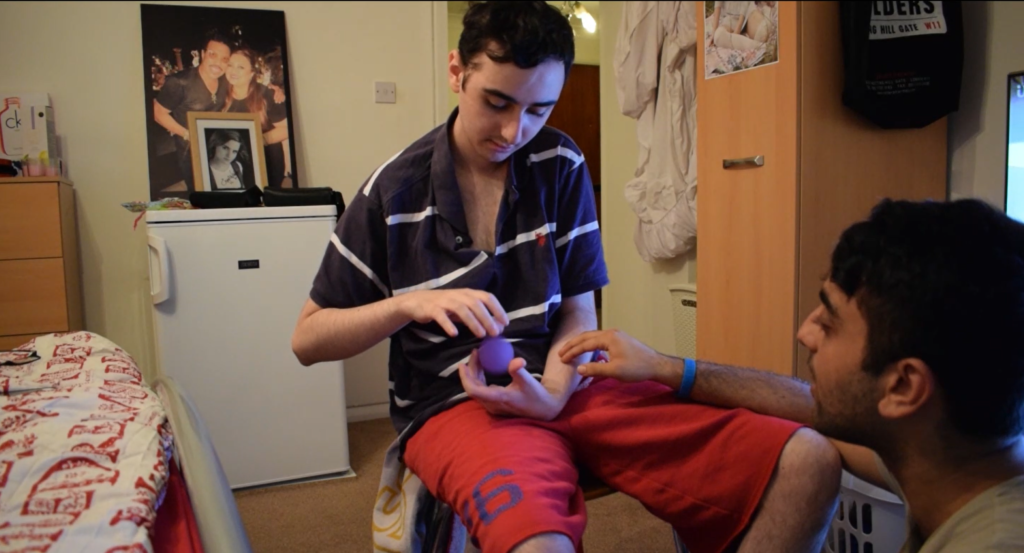
The Myonerv seed was sown when neuroscientist co-founder Sam Kamali’s cousin suffered a brain haemorrhage when they were both 11. That experience set Sam on a journey. And it’s why making a difference to real people’s lives is what drives Myonerv.
“Stroke recovery shouldn’t depend on patients doing all the work alone. I want people to feel like they’re seen and that Myonerv is always available.”
At Myonerv, we’re connecting with clinicians and people affected by stroke or brain injury who want to help shape the technology to give people their arms and their freedom back.
Join our update list to hear about Myonerv’s clinical developments, upcoming trials and ways to get involved.